
Ansys Fluids is a comprehensive fluid simulation platform designed to help engineers analyze, validate, and optimize fluid systems. Whether it’s internal flow, external aerodynamics, heat exchangers, or multiphase systems, Ansys Fluids provides powerful tools. Engineers can predict flow behavior, optimize thermal performance, reduce prototyping costs, and accelerate product development cycles.
Core Products
Ansys CFD - ️Simulate the Physics
Perform detailed CFD analysis with turbulence, heat transfer, and multiphase capabilities.
Overview:
Ansys CFD is the core fluid simulation environment for analyzing steady and transient flows, turbulence, heat transfer, and multiphase systems. Engineers can simulate compressible, incompressible, reacting, or non-reacting flows with high accuracy.
Used for: aerodynamic studies, valve and pump design, HVAC and electronics cooling, and coupled fluid–structure interactions.
Key Benefit: Predict performance under real operating conditions, reduce prototyping time, and improve flow efficiency early in design.
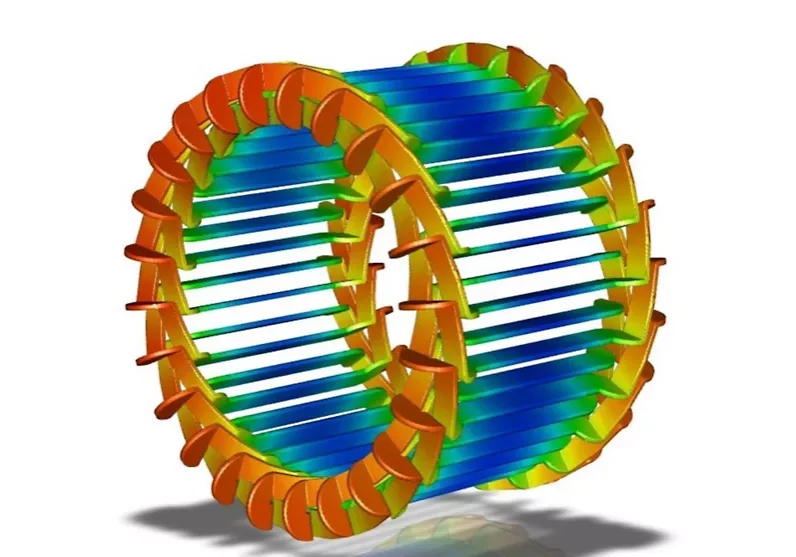
What's in it for Engineers
Fluid Dynamics Mastery:
Fluent's advanced Computational Fluid Dynamics (CFD) capabilities allow engineers to model and optimize airflow, heat transfer, and fluid interactions. This is especially useful in industries like aerospace, automotive, and HVAC, where air or fluid flow is crucial to performance.
Detailed Turbulence and Heat Transfer Simulation:
Fluent enables engineers to simulate complex flow and turbulence scenarios, optimizing the efficiency of systems like jet engines, turbines, and HVAC units.
Multiphase and Combustion Simulation:
For applications involving combustion (e.g., engines), Fluent provides highly accurate simulations of fuel combustion and exhaust, improving fuel efficiency and lowering emissions.

License Tiers – Flexibility for Every Engineer
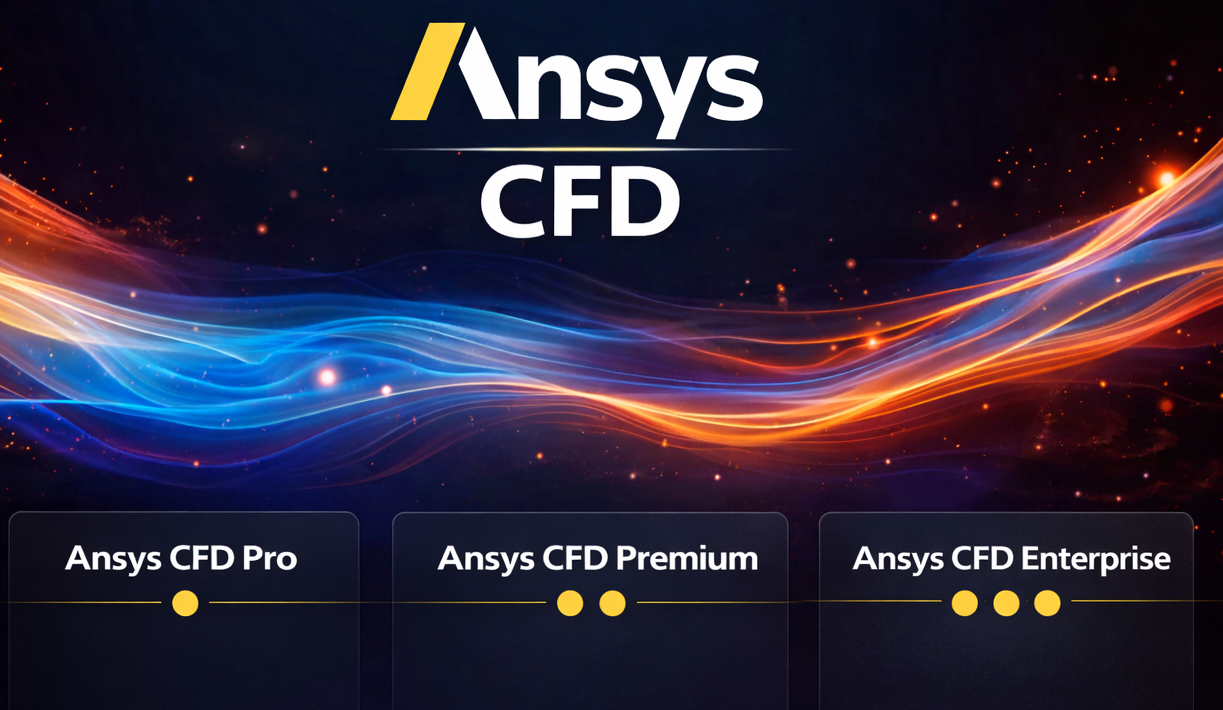
Ansys CFD is available in multiple license tiers — Pro, Premium, and Enterprise — designed to suit different levels of simulation depth and complexity.
Key Benefit: Whether you are running quick design checks or enterprise-level multiphysics projects, Ansys CFD provides the right tier to match your simulation needs and budget.
Ansys Blademodeler - Design the Geometry
Create optimized turbomachinery blades and impellers ready for performance validation.
Ansys BladeModeler provides dedicated tools for 3D design and parameterization of turbomachinery components such as impellers, rotors, and stators. It enables engineers to create fluid-optimized geometries that integrate seamlessly with downstream CFD and VistaTF analysis.
Used for: compressors, pumps, turbines, and fans.
Key Benefit: Achieve faster, more accurate blade design with direct data transfer to CFD for aerodynamic and performance validation.

Ansys VistaTF -️ Predict Flow Performance
Run 1D meanline analysis to estimate pressure, velocity, and efficiency at early stages.
Ansys Vista TF is a 1D throughflow and meanline design tool that delivers rapid turbomachinery performance predictions. It helps designers evaluate key flow parameters such as efficiency, pressure ratio, and velocity distribution early in the design stage.
Used for: preliminary design and optimization of pumps, compressors, and turbines.
Key Benefit: Accelerate concept development with quick, reliable flow predictions that guide detailed CFD validation.

Ansys Rocky DEM -️ Optimize Material Interaction
Capture particle dynamics, erosion, and wear for long-term equipment reliability.
Ansys Rocky DEM is a particle-based simulation platform for modeling granular, bulk, and coupled fluid–particle flows. It captures realistic particle motion, breakage, and erosion, offering deep insights into material interactions under process conditions.
Used for: slurry and sediment transport, erosion prediction, mixing, and bulk material handling.
Key Benefit: Optimize system performance, minimize wear, and extend equipment lifespan through accurate particle-flow visualization.

Highlights of Fluids Simulation
Steady-State & Transient CFD Analysis
Predict fluid flow behavior under a wide range of operating conditions with high-fidelity accuracy.
engineers ensure structural integrity, safety, and performance — long before physical testing.
Key Capabilities:
Benefits

Turbomachinery & Blade Analysis
Design, analyze, and optimize rotating machinery for maximum efficiency and reliability.
Key Capabilities:
Benefits

Valve & Flow-Control Device Analysis
Optimize valves, nozzles, and flow-control devices for efficiency and safety.
Key Capabilities:
Benefits

Applications Across Industries
Fluid simulations play a crucial role in aerospace, automotive, chemical, energy, and industrial sectors. At SolidTrust Technologies, our solutions are tailored to meet the unique requirements of every domain.

Relevant FAQs
Yes, Ansys CFD allows both steady-state and transient simulations for single-phase, multiphase, compressible, and incompressible flows.
Yes, including RANS, LES, DES, and hybrid turbulence models for capturing complex flow behavior.
Yes, BladeModeler and VistaTF enable performance prediction, rotor-stator interaction, and tip clearance analysis for turbomachinery.
Yes, including pressure drop, cavitation, transient flow, and fluid-structure interaction in valves and throttling devices.
Yes, Ansys supports CHT and coupled thermal-fluid simulations for heat exchangers, electronics cooling, and multiphysics systems.
Yes, CFD and Rocky DEM handle gas-liquid, liquid-liquid, reactive, and particle-laden flows with erosion and deposition prediction.
Yes, including drag, lift, free-surface modeling, wave effects, and transient external flows for vehicles and vessels.
Yes, parametric studies, topology, and shape optimization allow rapid improvement of flow systems and energy efficiency.
Yes, Rocky DEM supports discrete element modeling and coupled CFD-DEM for powders, slurries, and industrial granular processes.
Yes, Ansys fluids products simulate pumps, valves, heat exchangers, and rotating machinery accurately under realistic operating conditions.
Success Stories
Fluids
Ready to optimize your designs with Ansys Fluids?
Get licensing, pricing, and training support from SolidTrust Technologies, your trusted partner for Ansys software in India.

