
Ansys Optics & Photonics delivers a unified platform to simulate light propagation, photonic device behavior, and system-level optical performance. Engineers and designers can predict how light interacts with materials, structures, and systems — reducing physical iterations and ensuring perfect optical quality before production.
Core Product
Highlights of Optical & Photonics Simulation
Optical System & Illumination Design
Accurate lighting is crucial in automotive, architectural, and consumer products for safety, efficiency, and visual comfort. Optical system and illumination simulation allows engineers to predict light behavior and optimize designs before physical prototyping, ensuring real-world performance.
Key Capabilities:
Benefits

Laser & Photonic Device Simulation
Photonic devices, waveguides, and integrated circuits form the backbone of optical communication and computing systems. Simulation enables engineers to design, analyze, and optimize these components with high precision, ensuring efficient performance under operational conditions.
Key Capabilities:
Benefits

Fiber Optics & Waveguide Analysis
Fiber-optic networks and integrated waveguides require precise simulation to maintain signal integrity and minimize losses. Engineers can predict propagation, mode behavior, and non-linear effects, enabling robust and efficient communication system design.
Key Capabilities:
Benefits

Imaging, Lens & Sensor Systems
High-performance imaging and sensing systems are critical for industrial, medical, and consumer applications. Simulation allows precise modeling of lenses, cameras, and optical sensors to optimize image quality, tolerance, and system reliability before production.
Key Capabilities:
Benefits

LiDAR & Autonomous Vision Systems
LiDAR and vision systems are essential for autonomous vehicles and drones to perceive their environment accurately. Simulation enables engineers to model light propagation, sensor response, and environmental interactions, reducing development time and improving operational safety.
Key Capabilities:
Benefits

AR/VR & Display Optics
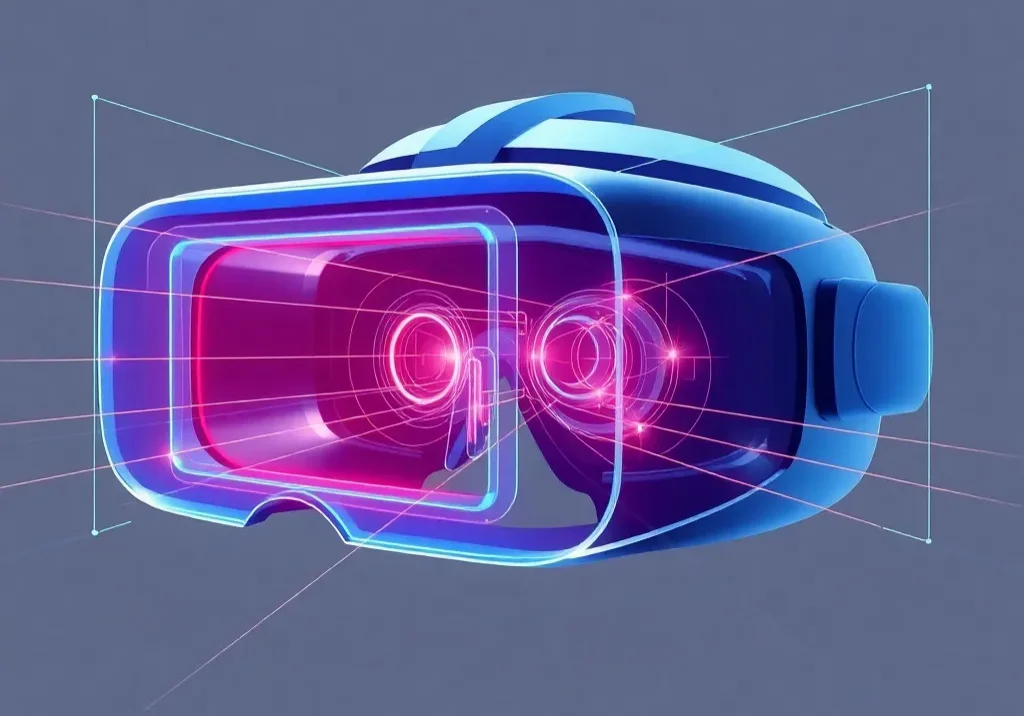
AR/VR devices demand precise optical performance for immersive experiences. Simulation allows engineers to optimize light paths, lenses, and holographic elements, ensuring visual clarity, comfort, and compact, lightweight designs.
Key Capabilities:
Benefits
Laser & Light Propagation Analysis
Laser applications in manufacturing, sensing, and biomedical fields require precision modeling to ensure correct beam behavior and material interaction. Simulation enables engineers to predict performance, minimize errors, and design for safety and efficiency.
Key Capabilities:
Benefits

Applications Across Industries
Optical & photonics simulations play a crucial role in telecommunications, semiconductor, aerospace, automotive, medical imaging, and consumer electronics — from next-gen consumer electronics to autonomous vehicle vision systems.
At Solid Trust Technologies, we tailor Ansys solutions to each industry’s optical and photonic challenges.
Relevant FAQs
Yes, Ansys Speos and Zemax enable end-to-end optical system simulation, from source to sensor.
Absolutely — Ansys Lumerical provides a complete suite for PICs, nanophotonics, and waveguide design.
Yes, optical, thermal, and mechanical domains can be integrated for real-world accuracy.
Yes, with Ansys Zemax and Mechanical coupling, you can simulate optical alignment under deformation and stress.
Yes, Ansys Lumerical supports laser and nonlinear optical simulations, including heat generation and propagation effects.
Yes, Ansys Speos allows visual ergonomics, camera response, and lighting analysis for realistic results.
Success Stories
OpticalPhotonics
Ready to transform your optical and photonic designs with simulation-driven insights?
Partner with SolidTrust Technologies Pvt. Ltd., your certified Ansys channel partner in South India, for expert consultation, training, and support.

